
How businesses, foundations and communities can close the gap in a rapidly changing world
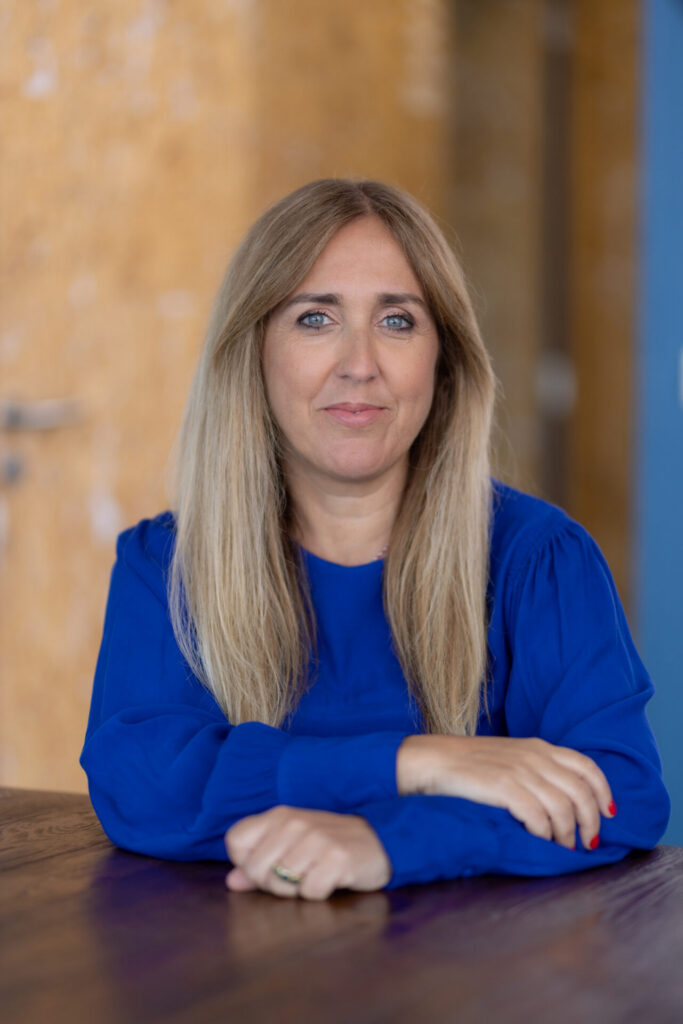
By Benedita Miranda, Executive Director, Foundever.org and EMEA COO, Foundever
When we think about the major challenges facing society today, we tend to focus on visible consequences — unemployment, inequality, and the disruption of technological change. But beneath many of these lies a more fundamental issue: unequal access to opportunity.
The opportunity to learn, to develop relevant skills, to build professional networks, to participate in the digital economy, and ultimately to shape one’s own future remains unevenly distributed. Where someone is born, their socioeconomic circumstances, their gender, or their access to education and technology can significantly influence the opportunities available to them.
At the same time, the world is undergoing profound transformation. Artificial intelligence is reshaping industries and new forms of employment are emerging. Skills requirements are evolving at a pace few could have predicted a decade ago. Of course, these changes create enormous possibilities but they also risk widening the existing gaps if access to knowledge, skills and support does not keep pace. The challenge before us is therefore not only economic or technological — it is fundamentally human.
How do we ensure that more people can participate in the opportunities being created by this transformation?
This question was at the heart of many discussions during the 2026 Philea Forum in May, which brought together foundations, social impact organizations, and philanthropic leaders from across Europe. Topics varied, from employability and education to AI, social innovation, and community resilience, yet a common theme emerged: creating opportunities is not enough. We must also ensure that people have the means to access them. This requires us to rethink how we approach social impact.
For many years, conversations about inequality have focused primarily on needs. While addressing immediate needs remains essential, long-term progress depends on expanding opportunities. It depends on helping people acquire skills, confidence, networks, and support systems that enable them to build sustainable futures for themselves and their families.
It also requires collaboration. No single organization can address complex societal challenges alone. Businesses, NGOs, educational institutions, foundations, and public sector organizations each bring different capabilities and perspectives. The most effective solutions emerge when these strengths are combined around a shared objective.
At Foundever.org, this belief sits at the heart of our work. Across different regions of the world, we support initiatives focused on education, employability, mentoring, entrepreneurship, digital inclusion, and AI literacy. Though the programs themselves vary, they are united by a common purpose: creating pathways to opportunity. Whether it is helping women in Egypt and Morocco develop digital and entrepreneurial skills through programs such as Freelance Mama and Business Mama, connecting students and young professionals with mentors through the Global Mentorship Initiative, or preparing young people for the future of work through education and employability initiatives in the Philippines, our focus remains the same: expanding access to opportunities that can transform lives and strengthen communities.
We have learned that opportunity is rarely created through a single intervention. It is built through a combination of skills, support, exposure, confidence, and relationships. It is created when people are given the tools not only to participate in the economy, but to navigate change and shape their own future within it.
This is particularly relevant in the age of artificial intelligence. Much of the public conversation around AI focuses on productivity, efficiency, and disruption. These are important discussions, but equally important is ensuring that people have the skills, confidence and understanding needed to participate in an increasingly AI-enabled world.
AI literacy is rapidly becoming a new dimension of inclusion. Those who understand and can leverage these technologies will be better positioned to access emerging opportunities. Those who do not may face new forms of exclusion. Ensuring broad access to digital and AI-related skills is therefore not simply an educational challenge; it is an opportunity challenge.
The same principle applies to employability more broadly. In a world where careers are increasingly non-linear and lifelong learning is becoming essential, access to opportunity cannot be viewed as a one-time event. It must be seen as an ongoing process of learning, adaptation, and growth.
This is why mentorship matters. Why future skills matter. Why digital inclusion matters. Why education matters. Each represents a pathway to opportunity.
As we look ahead, foundations, businesses and social impact organizations have an important responsibility: not simply to respond to change, but to help ensure that more people can benefit from it.
The future will undoubtedly bring new challenges and new uncertainties. But it will also bring extraordinary opportunities. Our collective task is to make sure those opportunities are not reserved for a few, because the defining challenge of our time may not be creating opportunity — it may be ensuring that everyone has a fair chance to access it.